
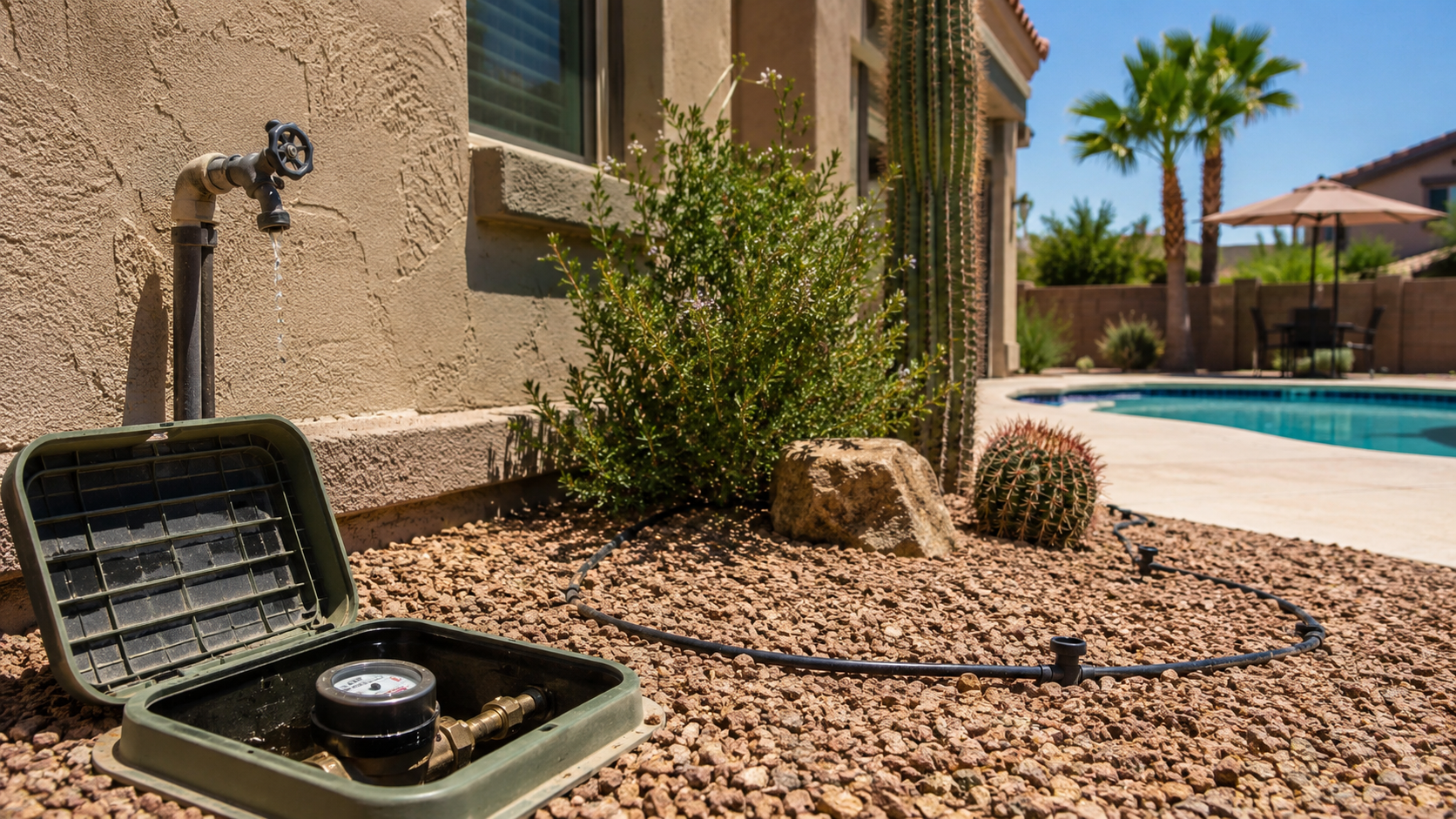
An unexpectedly high water bill during an Arizona summer can be frustrating—especially when you cannot immediately explain where all that extra water went.
Some increases are perfectly normal. Hot weather can mean longer irrigation cycles, increased pool water use, more showers, additional laundry, or changes in landscaping.
But when your water consumption jumps significantly without an obvious reason, a leak or malfunctioning plumbing component may be responsible.
Running toilets, dripping faucets, damaged irrigation lines, pool autofill systems, water heater leaks, and hidden plumbing problems can all increase water usage without creating an obvious puddle.
The best way to find the cause is to troubleshoot the home one system at a time.
Here is a step-by-step checklist Arizona homeowners can use before calling a plumber.
Step 1: Compare Your Actual Water Usage
Start with the water bill itself.
Instead of looking only at the dollar amount, compare the actual amount of water your household used.
Water rates, billing periods, and seasonal charges can change, so consumption is usually a better indicator of whether your home is actually using more water.
Compare:
- This month with last month
- This summer with the same period last year
- Your average monthly consumption
- The number of days in each billing cycle
- Recent changes in household occupancy
Then think about anything that may have increased water usage.
Did you recently:
- Increase your irrigation schedule?
- Refill your swimming pool?
- Add new landscaping?
- Have houseguests?
- Pressure-wash exterior areas?
- Run more laundry than usual?
- Leave town while irrigation continued operating?
If you can explain the increase, you may not have a plumbing problem.
If you cannot, continue through the checklist.
Step 2: Check Every Toilet for Silent Leaks
Toilets should be one of the first things you inspect.
A toilet can leak continuously without leaving any water on the bathroom floor.
Sometimes you will hear it running.
Other times, water slowly moves from the tank into the bowl almost silently.
Listen for warning signs
Stand near each toilet while the house is quiet.
Listen for:
- Constant running
- Hissing
- Water periodically refilling
- The fill valve activating even though nobody flushed
A toilet that randomly refills throughout the day may be losing water from the tank.
Perform a food-coloring test
Remove the toilet tank lid and add a few drops of food coloring to the tank.
Do not flush.
Wait approximately 15 to 30 minutes.
If colored water appears in the bowl, water is escaping from the tank into the toilet.
Possible causes include:
- A worn flapper
- A damaged seal
- Fill valve problems
- Incorrect water level
- Other worn tank components
Even a relatively small toilet leak can add up when it continues 24 hours a day.
If you find a plumbing problem you do not feel comfortable repairing, Trinity Home Services provides plumbing services for Arizona homeowners.
Step 3: Inspect Faucets and Plumbing Fixtures
Next, walk through the house and check every faucet.
Inspect:
- Kitchen faucets
- Bathroom faucets
- Showerheads
- Bathtub faucets
- Laundry sinks
- Utility sinks
- Outdoor hose bibs
Look for dripping when the fixture is completely turned off.
Then inspect underneath sinks.
Check around:
- Supply lines
- Shutoff valves
- Drain connections
- Water filtration connections
- Cabinet flooring
Watch for:
- Moisture
- Mineral deposits
- Rust or corrosion
- Swollen cabinet materials
- Water stains
- Musty odors
Run each faucet briefly while looking underneath.
Some drain leaks only become visible while water is actively flowing.
Step 4: Inspect the Irrigation System
In Arizona, irrigation should be near the top of your troubleshooting list.
A damaged drip line or underground irrigation pipe can waste a surprising amount of water without creating an obvious problem near the house.
Run each irrigation zone separately and walk around your property.
Look for:
- Broken drip tubing
- Missing emitters
- Water spraying in the wrong direction
- Flooded planting areas
- Unusually soft or muddy soil
- Water running into the street
- One unusually green patch of landscaping
- Broken sprinkler heads
- Areas that remain wet long after irrigation stops
Check the controller too
Sometimes the problem isn’t a leak at all.
Your irrigation controller may have been changed accidentally.
Verify:
- Which days it runs
- Start times
- Duration for each zone
- Whether multiple programs are active
- Whether the same zone runs more than once
A small programming change can create a noticeable increase in summer water consumption.
Step 5: Check the Pool Autofill System
If you have a swimming pool, the autofill system can make water-loss problems harder to notice.
A pool autofill automatically replaces water whenever the water level drops.
That’s convenient, but it also means a pool leak can continue without the homeowner seeing the water level fall.
Inspect the autofill system and pay attention to whether:
- Water runs continuously
- The autofill activates frequently
- The pool level remains unusually high
- Water reaches an overflow
- The valve does not appear to shut off
- Your water usage remains high even after indoor plumbing checks out
If possible, monitor how frequently the autofill is operating.
A system that constantly replaces water may be compensating for a pool leak, malfunctioning valve, or excessive water loss.
If the problem appears to be within the home’s plumbing rather than the pool itself, you can learn more about Trinity Home Services and the plumbing services they provide in Arizona.
Step 6: Inspect the Water Heater
Your water heater can also be a hidden source of water loss.
Look around the unit without touching hot pipes, electrical connections, or other potentially hazardous components.
Check for:
- Water underneath the tank
- Damp flooring
- Rust or corrosion
- Moisture around valves
- Leaking plumbing connections
- Repeated puddles
- Water around drain or discharge piping
A small connection leak may be repairable.
However, water leaking from the tank itself can indicate a more serious problem.
If the water heater is actively leaking, avoid letting the issue continue unnoticed.
Step 7: Perform a Water Meter Test
If you haven’t found an obvious problem yet, the water meter can help determine whether water is still being used somewhere.
Choose a time when nobody needs water.
Turn off or stop:
- Faucets
- Showers
- Toilets
- Dishwasher
- Washing machine
- Irrigation
- Pool autofill, if practical
- Ice makers or other automatic water-using equipment
Make sure nobody uses water during the test.
Locate your meter and take a photo of the reading.
Wait for a period without using any water, then check the meter again.
If the meter changes
If the meter shows additional consumption even though everything is supposed to be off, water is likely flowing somewhere.
That does not tell you exactly where the leak is located.
It does, however, give you a strong reason to continue investigating.
If you’ve confirmed unexplained meter movement and cannot locate the source, that is a good point to consider professional leak detection.
You can view Trinity Home Services on House Pros Now for additional company information.
Step 8: Separate Indoor and Outdoor Water Use
Once you know water is flowing unexpectedly, the next goal is narrowing down the system responsible.
Where your plumbing setup allows it, you may be able to temporarily isolate:
- Irrigation
- Pool equipment
- Water treatment equipment
- Individual fixtures or appliances
Then check the meter again.
For example, if the meter stops after irrigation is shut off, the problem is probably outside rather than within the home’s interior plumbing.
Do not randomly operate valves if you are unsure what they control.
If you cannot confidently isolate the system, have a plumber help identify the source.
Step 9: Look for Hidden Water Damage
Some leaks develop inside walls, beneath flooring, or in other areas where the actual pipe is not visible.
Look for indirect warning signs.
Walls and ceilings
Watch for:
- Yellow or brown stains
- Bubbling paint
- Peeling paint
- Soft drywall
- Swollen baseboards
- Musty smells
Floors
Look for:
- Damp carpet
- Warped flooring
- Loose flooring
- Unusual discoloration
- Persistent warm areas
- Moisture near walls
Outside the house
Check for:
- Damp soil near the foundation
- Standing water with no obvious source
- Unexpectedly green vegetation
- Water stains on exterior walls
- Moisture when irrigation has been off
One symptom alone does not necessarily prove there is a plumbing leak.
Several symptoms appearing together deserve much closer attention.
Step 10: Pay Attention to Warm Floor Spots
An unexplained warm section of flooring can sometimes indicate a hot-water plumbing issue beneath the slab.
A warm floor does not automatically mean you have a slab leak.
However, it becomes more concerning when paired with:
- Increased water usage
- Meter movement
- Running-water sounds
- Reduced hot-water availability
- Moisture
- Flooring changes
Do not start removing flooring in an attempt to locate a pipe.
Professional leak-detection equipment can often help narrow down a suspected leak before invasive work is considered.
Step 11: Listen for Running Water
Sometimes you can hear a hidden leak before you can see one.
Choose a quiet time and turn off normal water-using appliances and fixtures.
Listen near:
- Bathrooms
- Kitchen walls
- Laundry rooms
- Water heater areas
- Plumbing walls
- Floors
Pay attention to:
- Hissing
- Trickling
- Dripping
- Water moving through pipes
If you hear water when nothing should be running, check the water meter.
Hearing water movement and seeing unexplained meter activity together are strong reasons to have the plumbing system inspected.
High Summer Water Bill Troubleshooting Checklist
If your Arizona water bill suddenly increases, work through these checks in order:
1. Compare water consumption.
Determine whether your household actually used significantly more water.
2. Check the toilets.
Listen for running and perform a food-coloring test.
3. Inspect faucets and fixtures.
Look for dripping and leaking connections.
4. Run the irrigation system.
Check every zone for broken lines and excessive watering.
5. Check the pool autofill.
Make sure it shuts off properly.
6. Inspect the water heater.
Look for moisture, rust, or active leaks.
7. Test the water meter.
Determine whether water is flowing when everything should be off.
8. Isolate systems where possible.
Narrow the problem to indoor plumbing, irrigation, or pool systems.
9. Inspect walls, ceilings, floors, and exterior areas.
Look for moisture and water-damage warning signs.
10. Listen for running water.
Investigate unexplained water sounds.
If you reach the end of this checklist and still cannot explain the water usage, professional leak detection may be worthwhile.
When Should You Call a Professional Plumber?
Not every higher-than-normal summer bill requires a plumber.
However, several warning signs suggest that professional inspection makes sense.
Consider contacting a plumber when:
- The meter moves with all known water sources turned off
- Your water usage has increased significantly without explanation
- You hear running water behind a wall
- Ceiling or drywall stains are spreading
- Flooring becomes unexpectedly warm or damp
- Water pressure suddenly changes
- The water heater is leaking
- Moisture repeatedly appears near the foundation
- You suspect plumbing beneath the slab
- You’ve eliminated irrigation and pool use but water consumption continues
Professional leak detection can help identify where water is escaping instead of relying on guesswork.
Trinity Home Services provides plumbing services for Mesa-area and Arizona homeowners. Visit the official Trinity Home Services website to learn more or contact Trinity Home Services if you need help troubleshooting a plumbing problem.
Why High Summer Water Bills Can Be Difficult to Diagnose in Arizona
Arizona households naturally use more water during certain parts of the summer.
Pools lose water, irrigation schedules change, landscaping requires attention, and household habits may shift.
That can make a slow plumbing leak harder to recognize.
A relatively small amount of additional water used every day may blend into your normal summer consumption even when it is actually coming from:
- A running toilet
- A dripping fixture
- An irrigation leak
- A pool autofill problem
- A water heater leak
- A hidden plumbing line
That is why looking at the entire pattern is important.
The question isn’t simply:
“Is my bill higher?”
The better question is:
“Can I explain where the additional water went?”
If you cannot, start troubleshooting.
Find Plumbing Help in Mesa and the East Valley
Trinity Home Services provides plumbing and home water-system services in the Mesa area.
House Pros Now has also featured Trinity Home Services in East Mesa, including information about the company’s plumbing and residential water services.
You can also visit the Trinity Home Services public profile on House Pros Now to learn more about the company or request work.
For additional Arizona homeowner maintenance articles, browse the House Pros Now blog.
Need Help Finding the Source of a High Water Bill?
If you’ve already checked the toilets, faucets, irrigation, pool autofill, water heater, and water meter but still cannot explain your water use, a plumbing inspection may help uncover a problem that isn’t immediately visible.
Visit the official Trinity Home Services website for more information or use their contact page to reach the company directly.
Trinity Home Services
Phone: (480) 287-0330
Email: info@trinityhomeservicesaz.com
Location: Mesa, Arizona
You can also view the Trinity Home Services profile on House Pros Now.